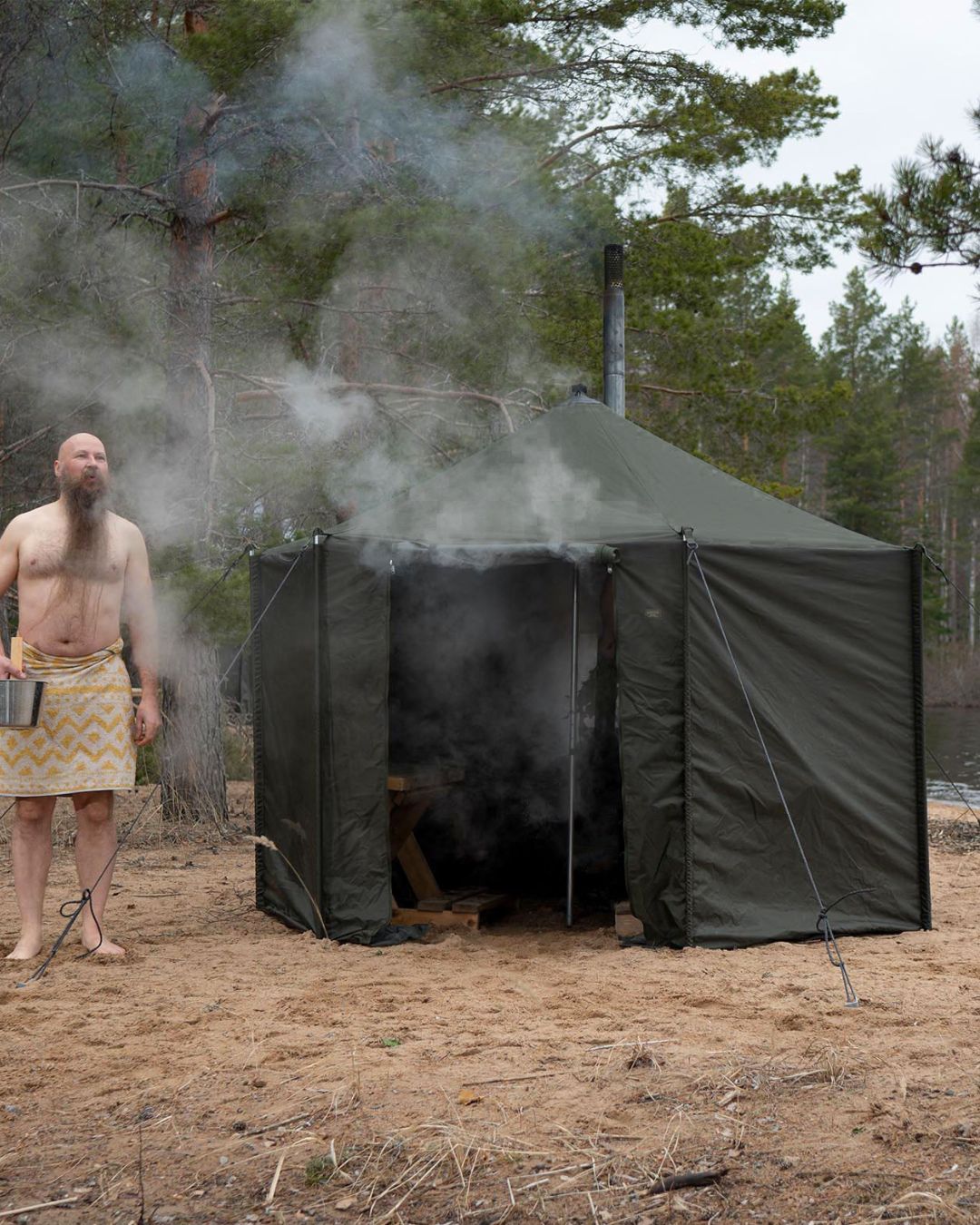
Savotta backpack guide by Joe Price:
Day hikes to multi-day expeditions
Watch the video and read the article below.
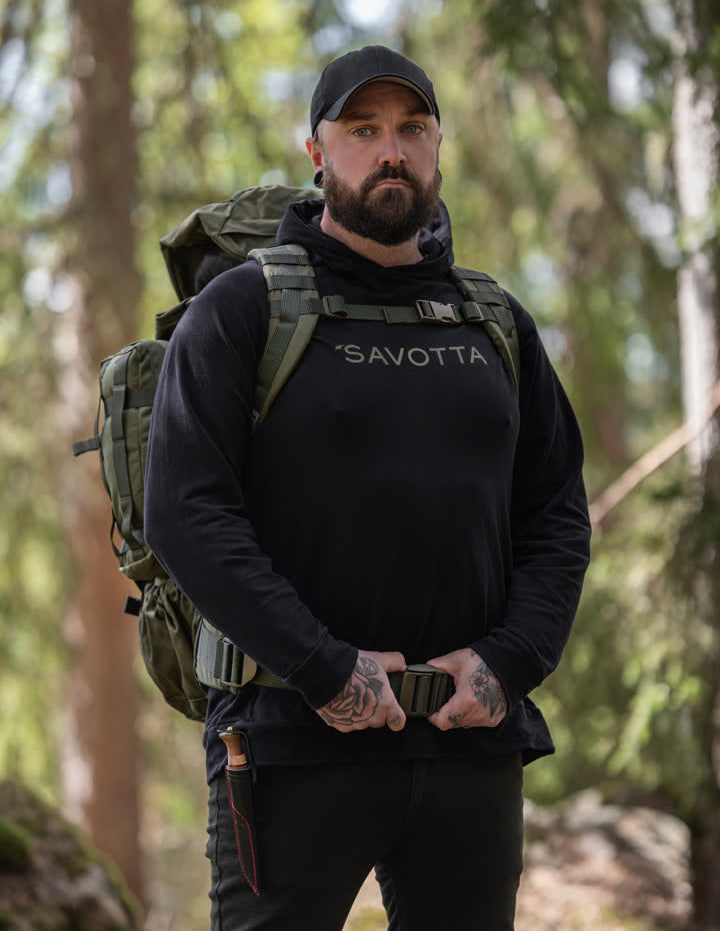
Hello,
If you’ve landed on this blog, chances are you share the same passion I do: a love of adventure, the outdoors, and dependable gear - especially anything bearing the Savotta name. Whether you’re a longtime Savotta fan, a first-time buyer eager to hit the trails, or someone seasoned in outdoor pursuits, I’m glad you’re here among friends who get just as excited about robust packs as they do about wild places.
You may find this blog a bit different. I don't want to assume this is the first piece you've read on backpacks or the outdoors. I believe writing is only worth doing if I can add to the conversation.
Instead, I will share the same lesson I give at my talks and courses worldwide: “We don't pack gear, we pack fear.” It explores why we carry what we carry - the backpacks, the kit, and the mentality. This talk has become the pillar of my outdoor speaking over the years.
Joe Price
Survival Instructor & Wilderness Skills Teacher
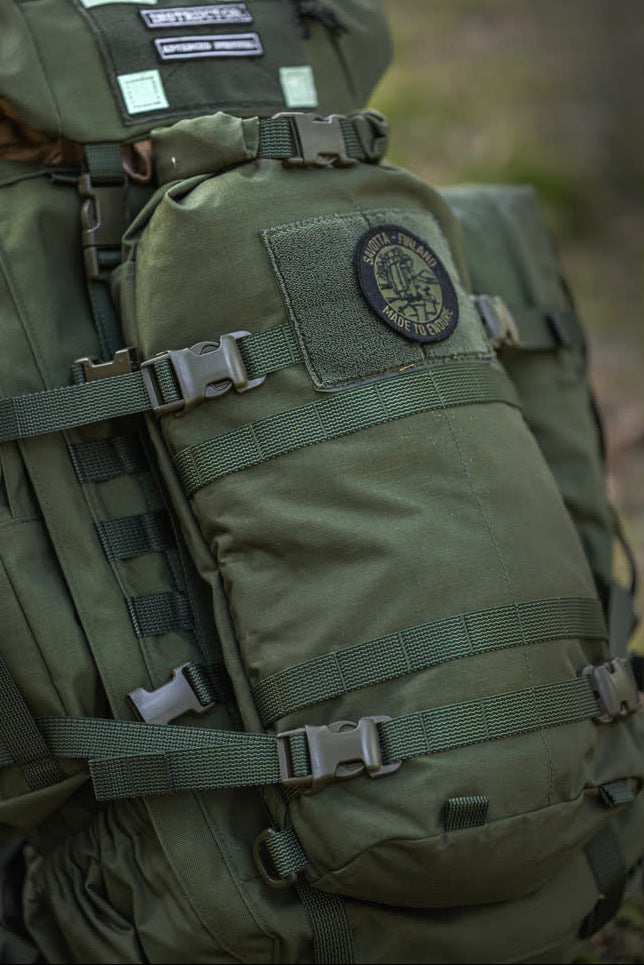
So, first things first, and probably the main reason we are here. “Why Savotta?” Most outdoor gear approaches the outdoors with the main focus being on comfort and convenience. Not a bad thing by any means. But these tend to sacrifice dependability and also introduce weak points into the whole system, and that's how you should be thinking about your kit and backpacks as one unified system.
I remember one particular trip in Ireland many years back. I was hiking with a friend who had chosen a lightweight, cuben fibred pack. Halfway through, the buckle on his shoulder strap snapped as we scrambled up some terrain. We still argue today about whether it was abrasion or his packing decisions. All that focus on making it light and cushy, but it just couldn't handle the actual demands of the trail. He spent the rest of the trip awkwardly tying his strap together and ended up shouldering most of the weight on one side, making the rest of the hike much harder than it needed to be. It's the kind of situation you remember the next time you choose your gear. When your backpack fails, your whole system is compromised, and that can turn an adventure into a struggle real fast.
If you have the experience to know where you're going, the environment you will be in, and the kit you carry inside, this approach works fine. But….like me, what happens if you don't? What happens if it's only the start of your outdoor journey and you don't know where you're going to land in the future? Like a Vegas buffet, you want to try it all. Maybe even you're like me, who loves all aspects of the outdoors. Monday could see you in a canoe, Wednesday a fishing trip, and the weekend sees you staying out for multiple days camping and hiking.
I don't want to have to purchase different backpacks from different makers in different sizes, shapes, and materials. Backpacks that, if they break, I need to send them away to specialist companies, or if a strap goes in the field, I also need to be carrying a full specialized stitching department to get it back on! I want a system where everything I purchase can adapt itself throughout my backpacks. I would share real-world examples of repairing my Savotta with you, but over 7 years of carrying them, they aint failed me once. That’s why it’s important to choose a company that focuses first on preventing failure, not on convenience. That company, in my opinion, is Savotta.
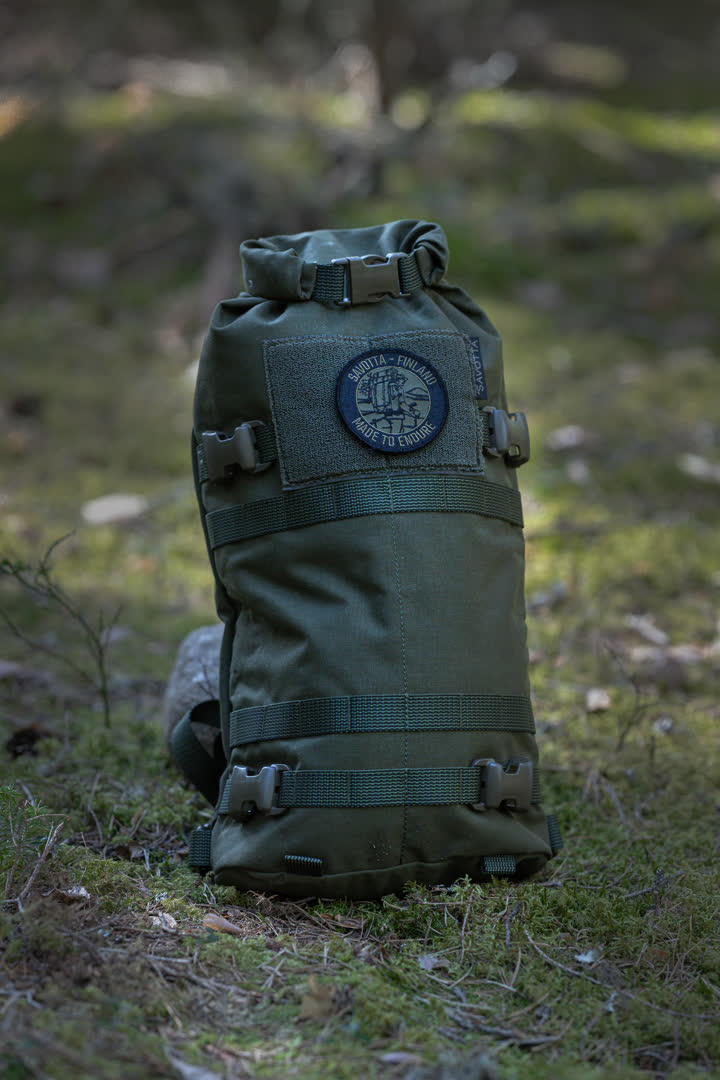
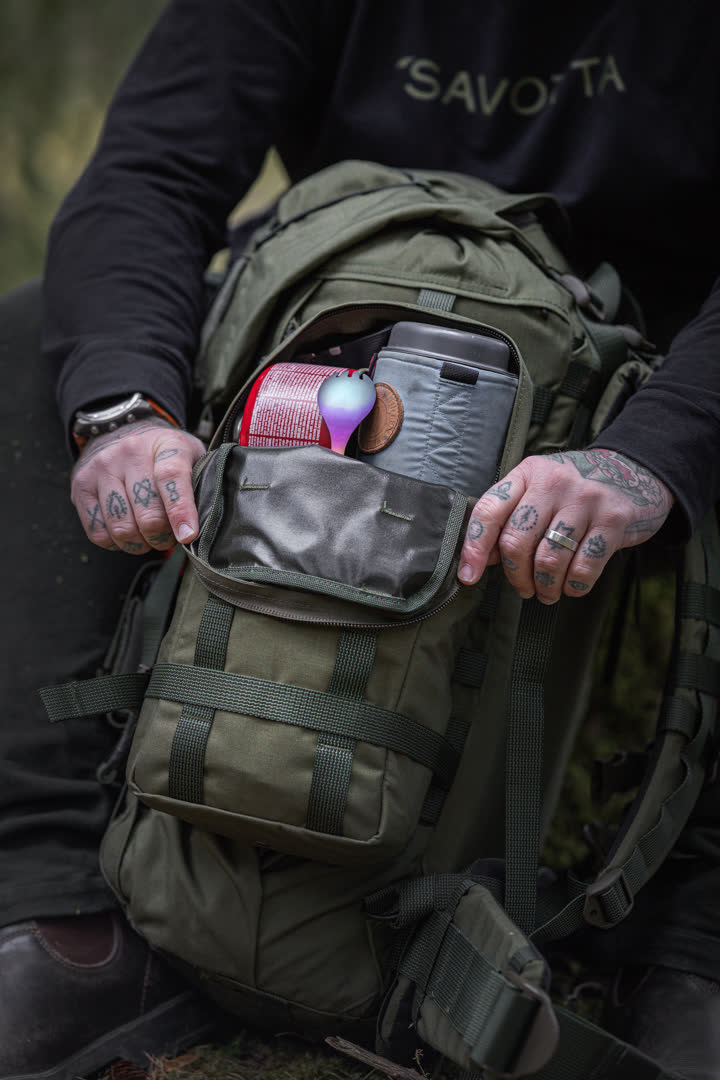
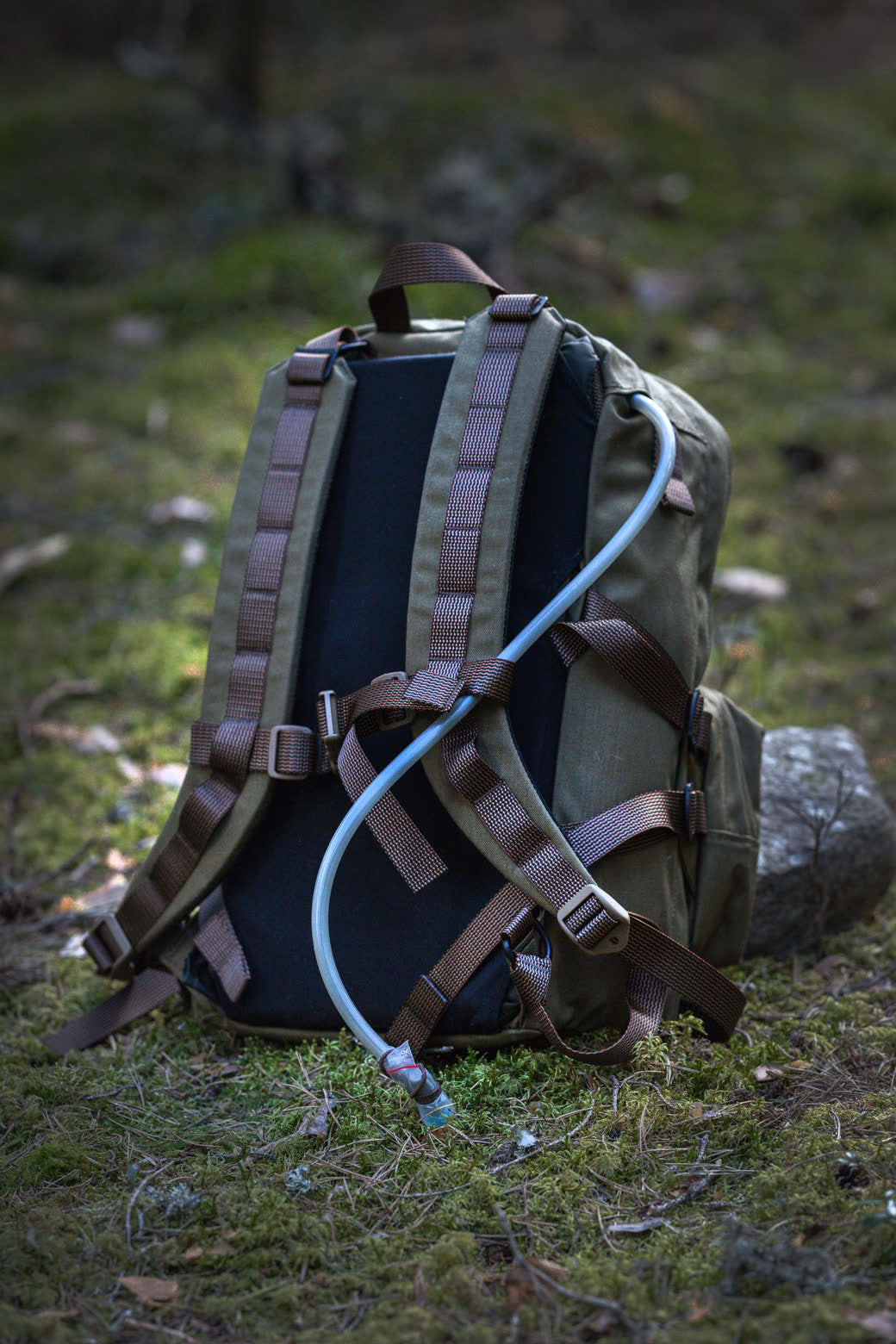
Why Savotta?
There are many ways I see people approach why they choose certain backpacks. But the best place to start is the material choices. Does the brand change materials over again to chase fashion, to capture trends, or are they truly dialled in to what they work with best? For example, I will talk about Savotta's main material, Cordura.
Cordura is widely used in industries and products that need rugged materials. Fashion brands use it, tactical brands use it. I have even seen it used in the culinary space! Cordura is a premium performance fabric. If you need gear that survives heavy wear, like hiking packs or tactical equipment, Cordura is often one of the best material choices.
Then comes the construction. Where does the stitching go? Where is abrasion most likely to happen? How does it perform in freezing wet conditions under unplanned stress and load? The difference lies between a brand that simply uses Cordura as a material and a company that truly understands how to work with it. The latter recognizes that design plays a crucial role alongside the fabric itself, because durability and quality don’t come from materials alone, but from how they are thoughtfully designed and constructed. This is why the name Savotta for me, tells you what it’s built for.
The one-day trip
The most common trip of all, and often the hardest one to set your pack up for. Most people carry too much on day hikes because they pack for anxiety rather than probability. Simply because it's the most varied trip. Is it up a mountain, into a forest, and a quick stop at a restaurant for a bite to eat on the way home?
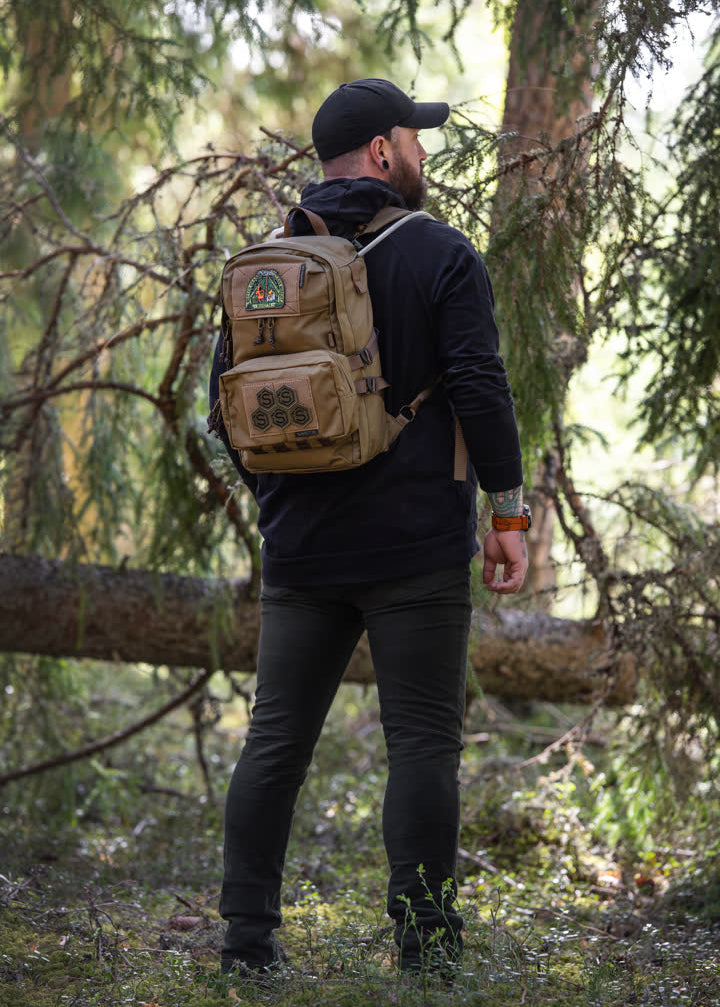
This is why I chose the Niukka 20L from the Savotta range. Simply modified with the closed cell foam back pad swapped out for the Savotta sitting pad and adding the Suur-kukkaro hip pack to the front. High speed, low drag, and plenty of options.
I operate a system where the kit I carry on day hikes is the base kit of all I carry. So, I focus on “fire, shelter, and water”. I also try to have more than one use for my items. Not entirely possible with everything, but it's a good way to look at your gear and a great way to save money.
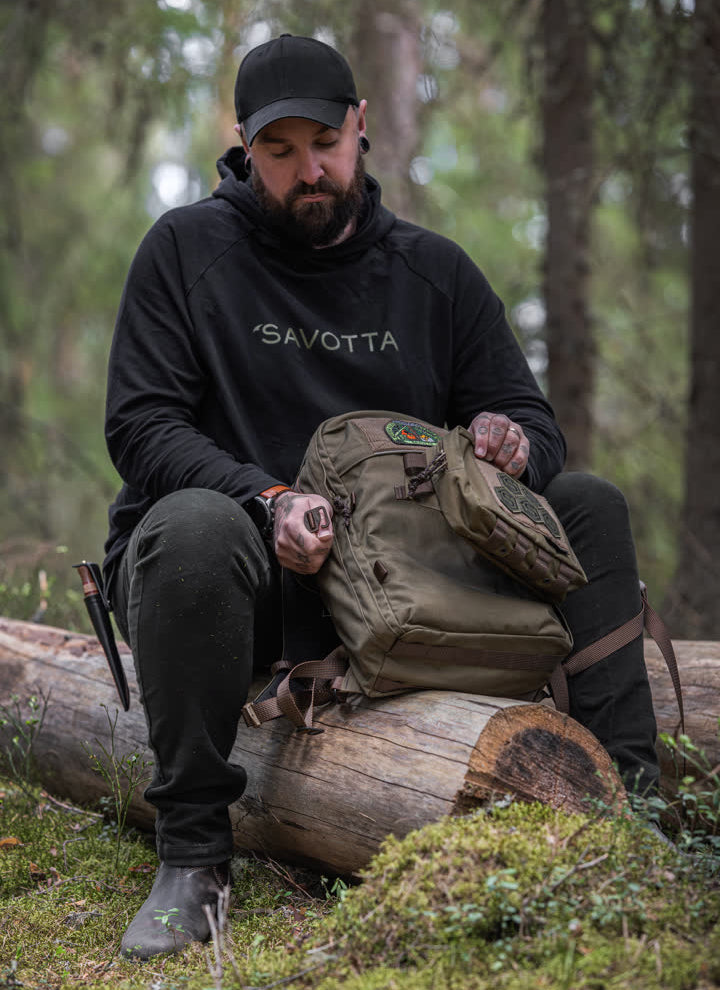
In the Suur-kukkaro, I keep a snack, my first aid kit, a lighter, and fuel for my Trangia. This saves me from having to carry a full fire kit, ain't nothing that can't be set on fire with fuel and a lighter. But it also keeps the fuel separate from my kit inside the pack. Also, this keeps the things I need first where I can grab them. The less time you have to access the main part of your pack, the better. It's worth spending some time thinking about this.
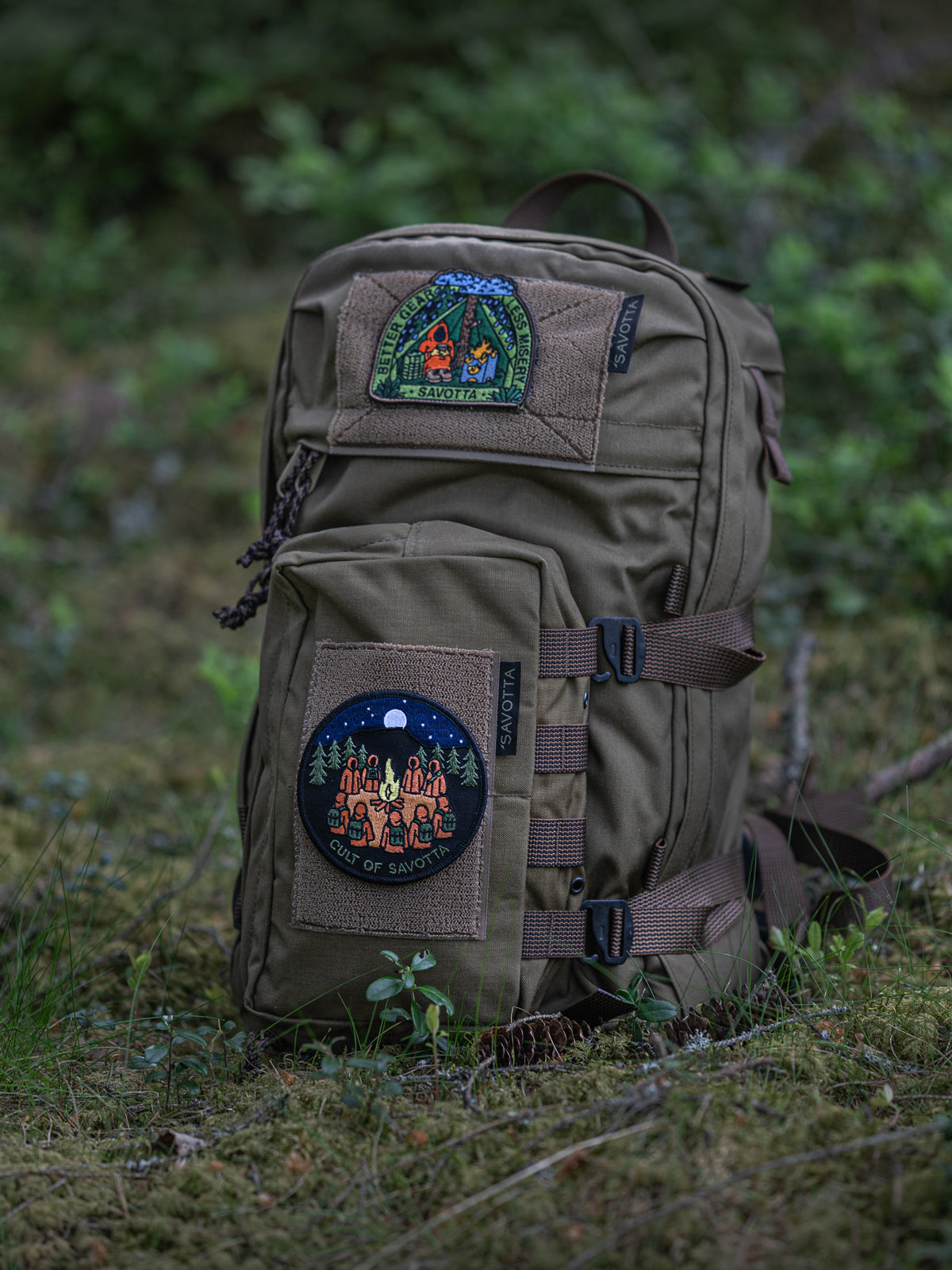
The Suur-Kukkaro also serves another purpose. When we get to our destination, whether it’s the mountain top, trailhead, lake, or barbecue place. The Suur-kukkaro allows me to go off and explore my surroundings. Clipped off the front, it turns into a comfy hip pouch or sling pack. Bringing all my essentials with me without having to go through the main bag. I like to mount it on horizontally for easy access, but you can also mount it on vertically.
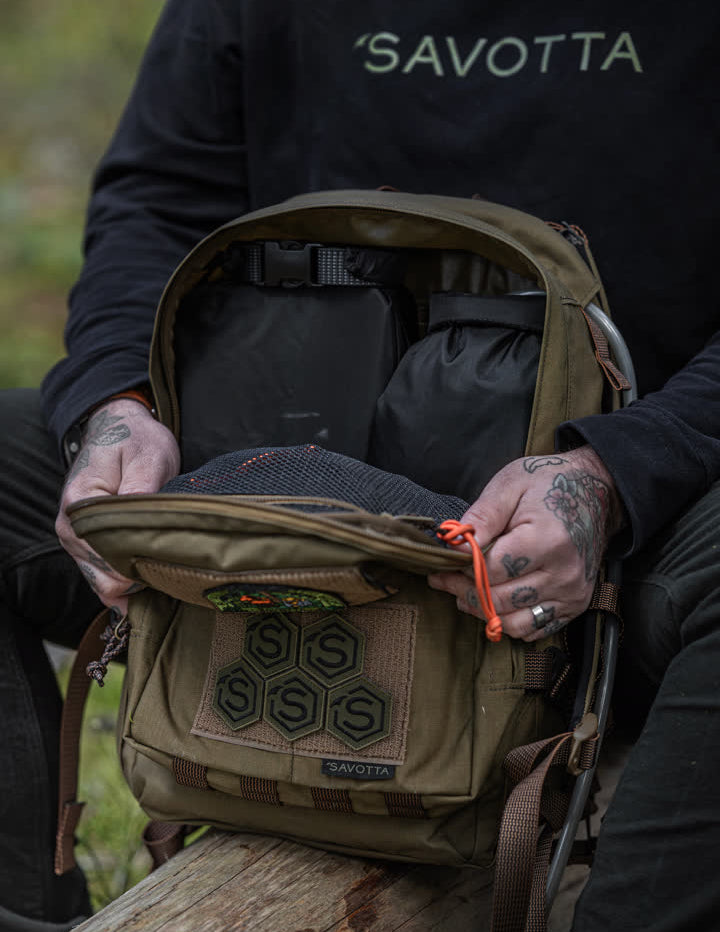
In the main bag, I have two of the 10L Rolltop stuff sacks. One to keep my kit separate and accessible, and two, a bit of protection from rain. It's important to remember that Savotta packs are highly water-resistant but not waterproof. Plus, sometimes it's just nice not to have your sandwiches smelling like old socks.
In one, I keep my shelter, which, for day hikes, should be mainly clothes. A poncho, hat, socks, briefs, and a buff usually are enough to see me right in the spring and summer months. In the second stuff sack is my water. A 1ltr stainless bottle, water purifier, Trangia, some coffee, and one freeze-dried meal.

In the front pocket, I keep my map case, and in the rear is a 1ltr hydration bladder and the super comfy Savotta sitting pad.
This kit may seem a little overkill for a day hiking bag. But it removes for me all that time spent thinking about the what-ifs and allows me to just pick my bag up and hit the trail. Even the food items aren't perishable, so when I come home, I can drop the bag there till its next adventure and not worry about coming back to a sandwich I forgot about that has now become a sentient life form.
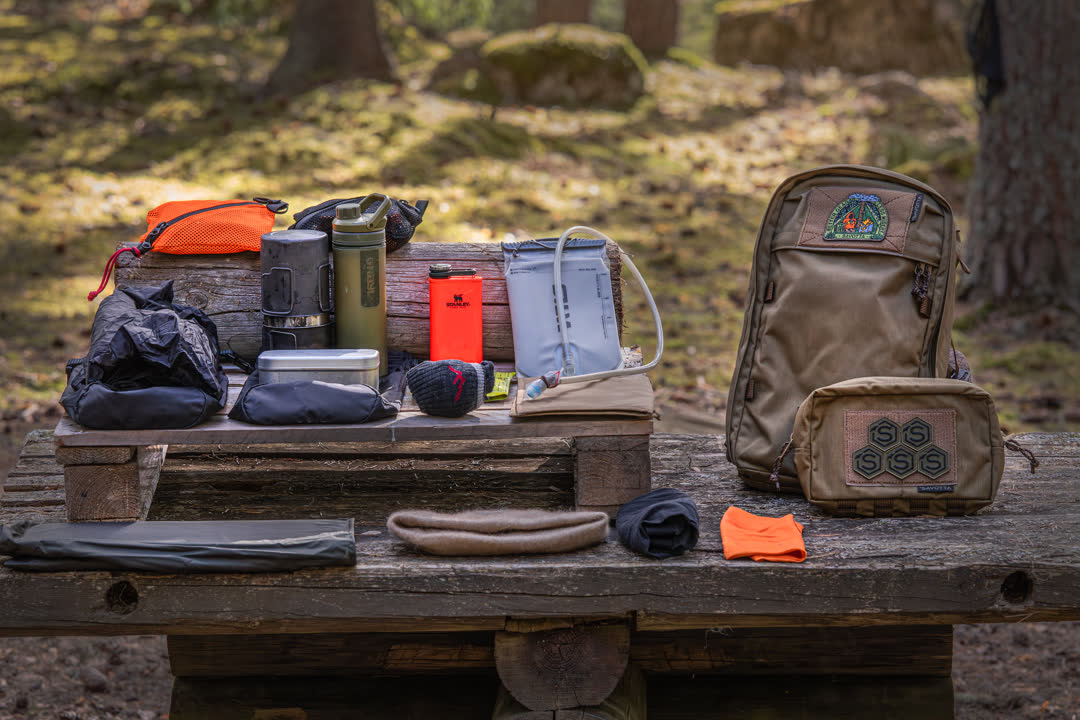
One day kitlist
Niukka 20L + Suur-Kukkaro hip pack
- Grayl water filter
- 1ltr Nalgene stainless bottle
- 250ml toaks titanium cup
- 450ml toaks titanium cup
- First aid kit
- Fire kit
- Titanium meths stove
- Fuel
- Snugpak patrol poncho
- Possum fur wool beanie
- Buff
- 1 pair of wool socks
- 1 pair of wool briefs
- Map case
- Suunto MC2 global compass
- Coffee
- 1 freeze-dried MRE
- Savotta sitting pad
- 1ltr Silva water bladder
- Helle Nordlys full tang knife
The two-day trip
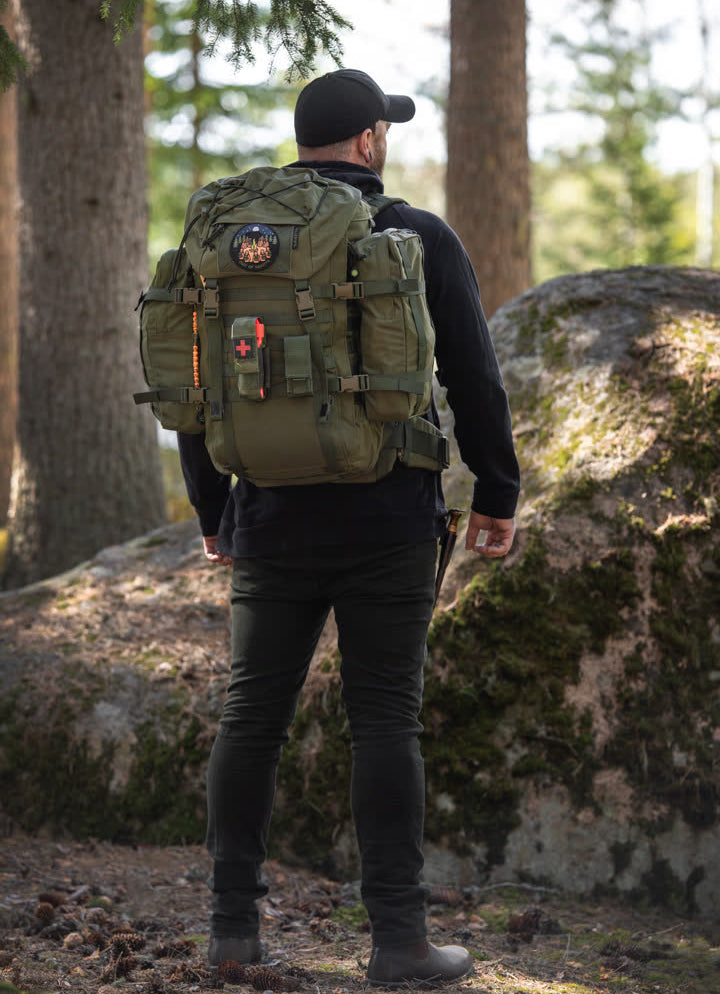
The favourite of us all, I think. The beloved “over-nighter”. For me, the pack of choice for this is the Kantamus 40L. Replacing my long-carrying (7 years and still looks new) Jääkäri M.
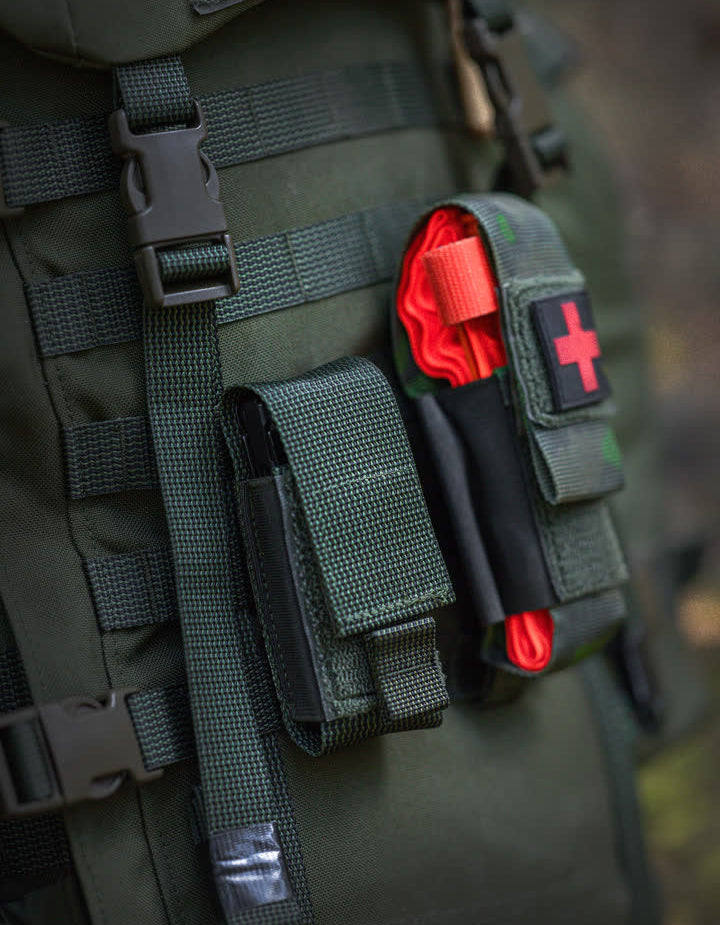
The Kantamus 40L has some amazing upgrades to the Jääkäri. A padded hip belt with a Berg buckle, adjustable and changeable shoulder straps are the most obvious, but the front also has a brilliant clam shell setup with access to a full-length pocket on the front and the inside of the pack on the other. A kit nerd like me loves the introduction of the Berg buckle, as it really makes this pack perfect for all year-round use. I added two 6L Side pouches, a Multi-tool pouch, and a Tourniquet pouch to the front.
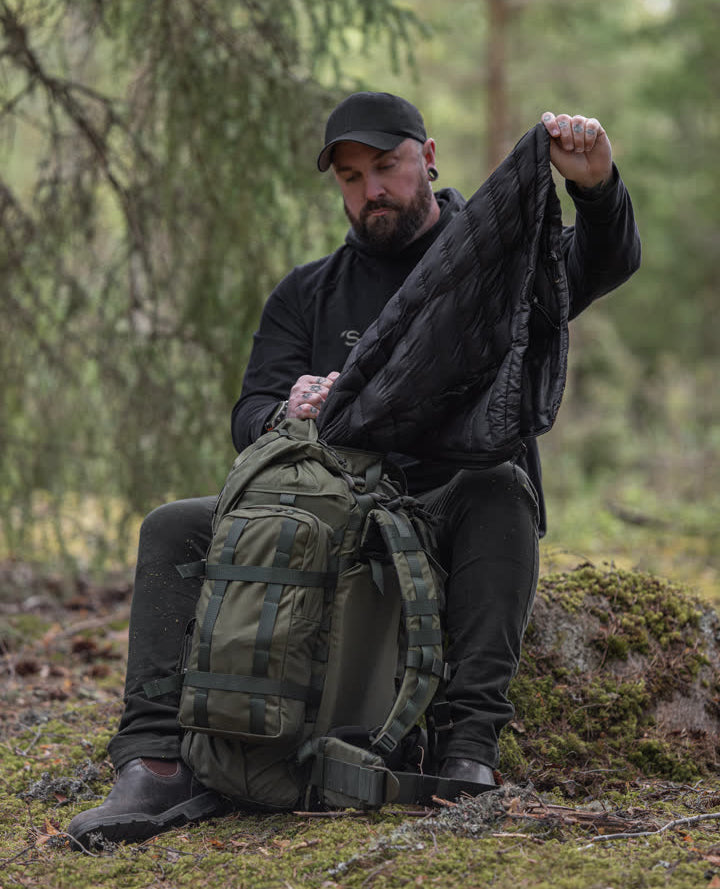
For my two-day load out, I simply add to my base kit a sleep system, beef up the clothes and food, and bam your ready to go!
This is why I put so much focus on the base kit, as I hope it shows that once you get that down, it can simply travel up pack sizes. The foam pad is now in the Kantamus; my fire shelter water kit is in there, too. All we have to think about here is sleeping warm and eating well. It also removes the biggest stress of all, and the one that causes the most problems when we are overpacking.
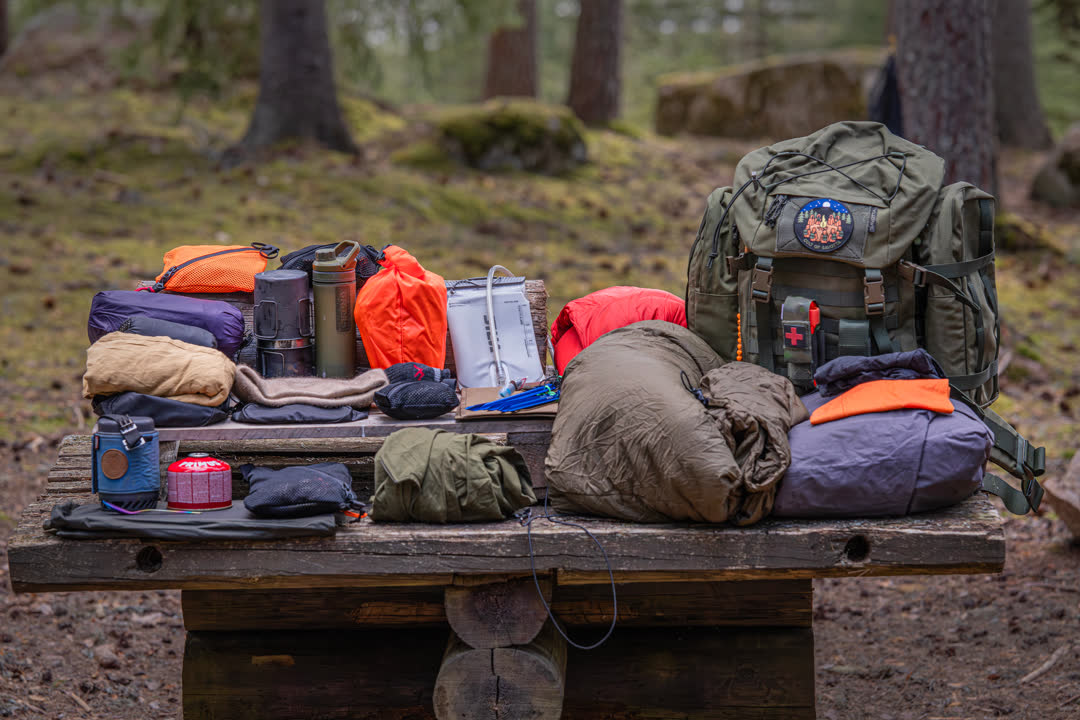
Overnight kit list
(base kit + upgrades) Kantamus 40L + Side pouch 6L
- Down jacket
- Primus cook system
- Saw
- Lesovik hammock
- Underquilt
- Overquilt
- Tarp
- Tent stakes
- Sleeping pad
- Sleeping bag liner
- Down sleeping bag
- 6 freeze dried meal (breakfast, lunch, dinner)
The 3-day and then some trip
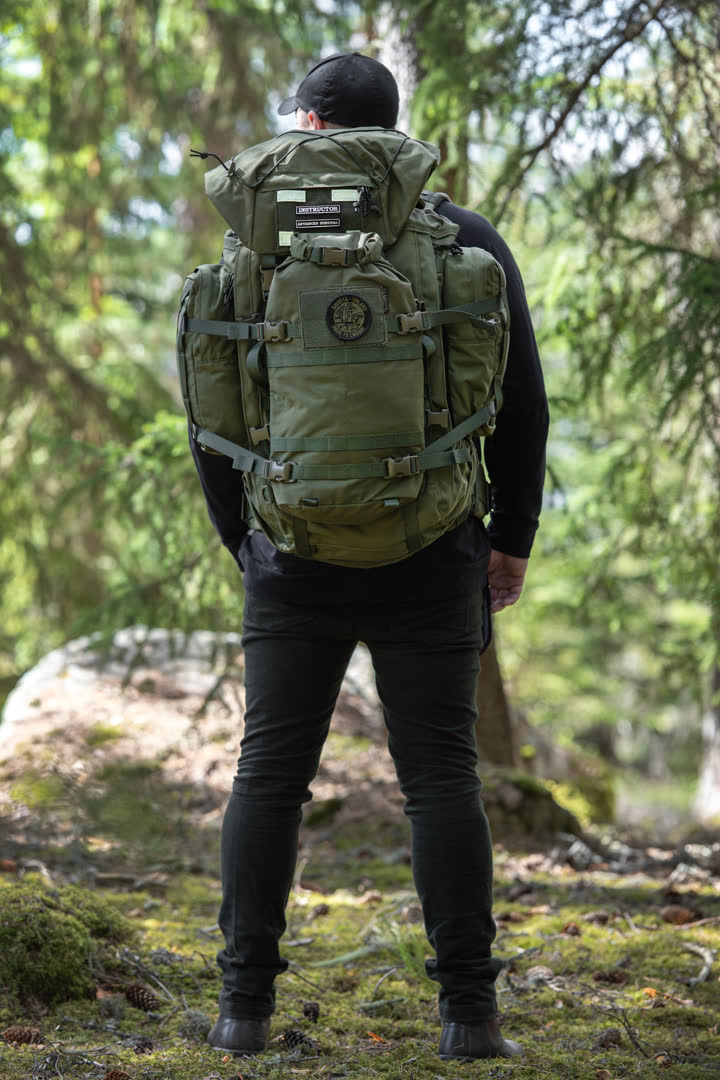
On longer hikes, comfort stops being luxury and become efficiency. This is why when we get to this stage, we want our base kit and two-day kit to be really dialled in and our backpack to be as bombproof as we can make it. That's why for me it's an easy choice with the Kantamus 60L in the spring and summer months.
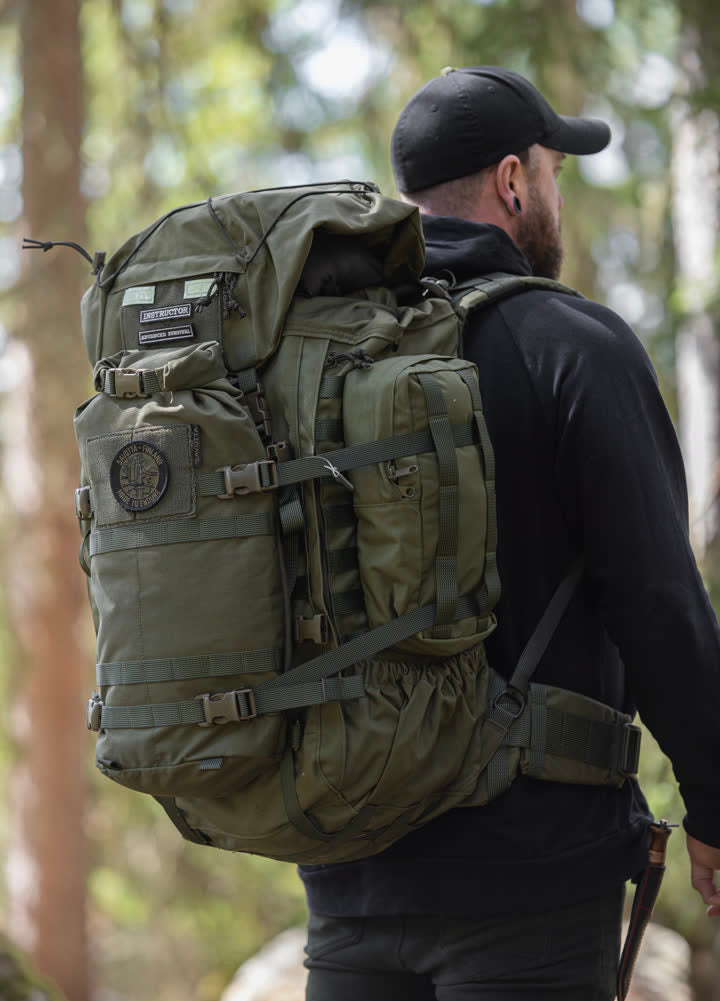
Set up in a combination of my one-day Niukka 20L pack and my two day Kantamus 40L pack. I keep the side pouces but have made them smaller, choosing the 4L size for better balance. Then I add the Hatka 12L backpack to the front to give me that mobility away from base camp. Balance and load distribution are key on these longer trips. So those lighter pockets higher up on the pack help keep the heaviest load centered along your spine and shoulders. When setting up a modular pack it’s always best practice to follow your body's own natural muscle structure.
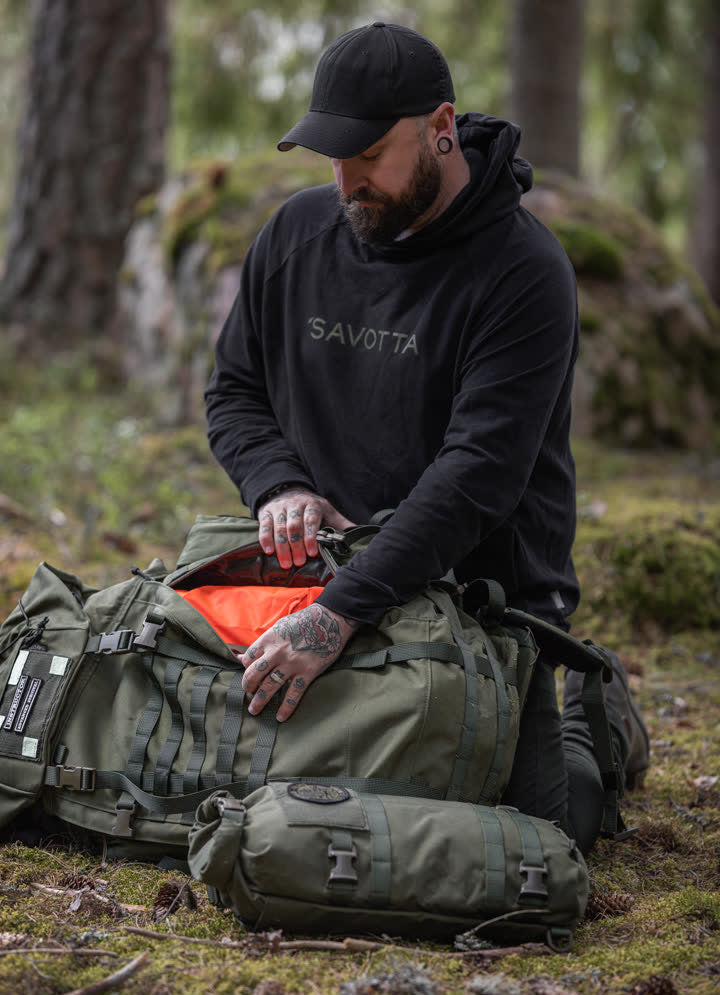
Inside my pack, I now have the two-day trip equipment. I simply swap out the hammock for a tent, add necessary tools, and beef up the food and clothing to suit. But some things do change and become so much more important on the 3 - 5 day expeditions. You really want a pack that's tough and easily repairable because a small pack problem on trips of these durations becomes a major issue to deal with. So, the Kantamus is a clear winner here in what we call “anti-failure thinking”. The longer a trip becomes, the less your backpack is judged by comfort in perfect conditions… and the more it is judged by how it behaves when things stop going to plan.
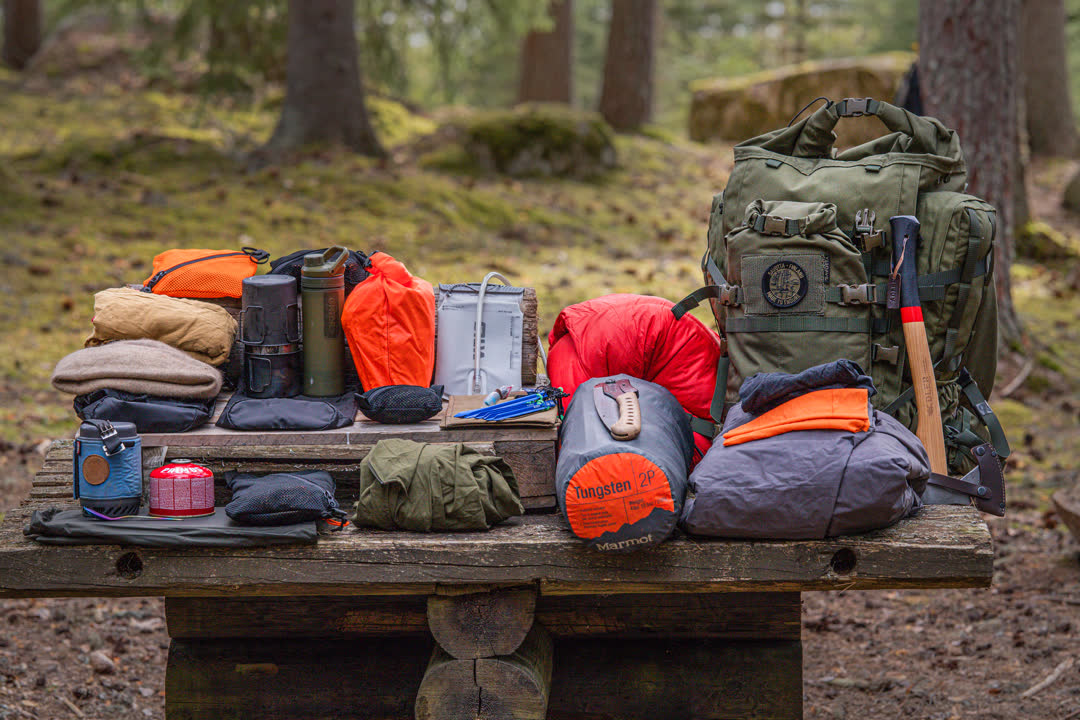
3 -5 day expedition kit list
(overnightkit, plus upgrades) Kantamus 60L + Hatka 12L + Side pouch 4L
- Tent (replacing hammock system with a tent)
- Axe (mainly for winter)
- Extra socks
- Extra food (suitable for caloric intake)
- Extra underwear
- Extra base layers
- Gps rescue system
More Savotta gear
scroll through our collections
Backpacks
Bags and other packs
Packing accessories
Patches and merchandise
All Outdoor gear
Other gear and accessories
Repair and spare parts
New Outdoor releases
Camp tents & Stoves